Sustainability meets ROI: The case for rugged device lifecycle management
European sustainability regulations are fundamentally reshaping how enterprise hardware is managed. With strict right-to-repair directives and the...
3 min read

Discover how IT solution providers can leverage RFID, vision systems, and the EU Right to Repair directive to transform chaotic warehouse returns into profitable circular economy workflows.
The “invisible user” is no longer the only entity consuming bandwidth in the European enterprise. In 2026, the primary consumer of your clients’ network capacity is increasingly the autonomous agent, the machine-vision system, and the sophisticated sensors tracking the lifecycle of every product. While the logistics sector has spent the last decade perfecting outbound shipping to meet the demands of next-day delivery, a critical bottleneck has formed at the other end of the supply chain: reverse logistics.
For years, returns were viewed as a necessary evil – a messy, manual cost centre that drained profitability. However, the shift toward a circular economy is fundamentally changing this narrative. Driven by the EU’s Right to Repair initiatives and a projected $62.5 billion global value pool in untapped revenue from returned goods, reverse logistics is transitioning from a back-office burden to a frontline growth engine. As an IT solution provider, you are uniquely positioned to act as the architect of this transformation.
The regulatory mandate of the circular economy
The European healthcare and retail landscapes are already feeling the pressure from regulatory shifts such as NIS2 and the Digital Product Passport. Now, the warehouse and manufacturing sectors are facing their own milestone: the EU’s Right to Repair Directive. Adopted in 2024 and taking full effect by 31 July 2026, the directive mandates that manufacturers of products such as smartphones and appliances provide repair services at a reasonable price and within a reasonable timeframe.

This is not just a consumer protection law; it is a fundamental shift in how goods must flow through a warehouse. To comply, your clients must move away from black-box environments in which returned data is locked in proprietary formats. They need infrastructure that supports the high-fidelity data movement required for AI agents to parse, grade, and route returned items in real time. By helping your clients bridge this legacy gap, you move beyond simple hardware sales to become a digital risk officer, ensuring their operations remain compliant and profitable.
From scanning to sensing in reverse logistics
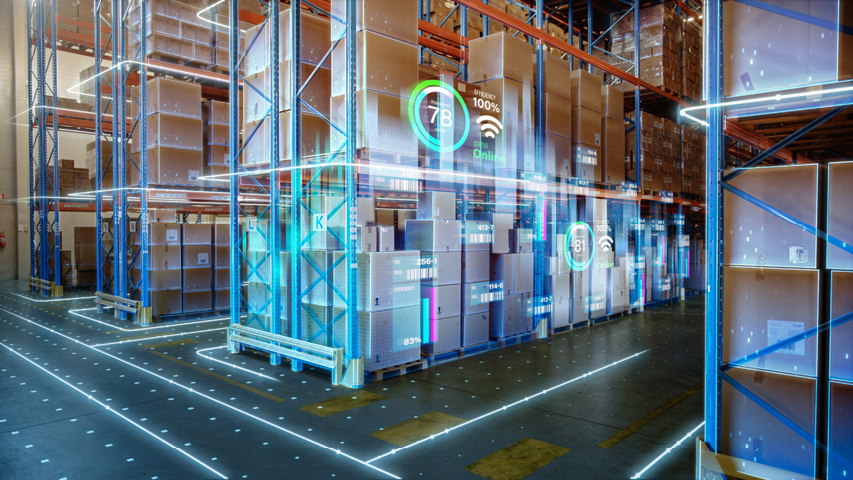
Traditional reverse logistics relies on episodic scanning – a worker physically pointing a scanner at a returned pallet. This approach is inherently chaotic and creates significant visibility gaps. If an item is misplaced after the initial scan, it effectively disappears from the system until it is manually found again. To address this, you should guide your clients toward ambient IoT technology.
By deploying battery-free Bluetooth sensors and IoT Pixels, products can continuously broadcast their status to the network. These tiny, cost-effective tags not only transmit an ID but also provide real-time data on location, movement, and environmental conditions such as humidity and temperature. This continuous stream of data enables warehouse management systems to proactively alert workers if a high-value return is being processed incorrectly or if a repairable item is sitting idle for too long.
Integrating vision-guided intelligence
While RFID provides the tracking, AI-enabled vision systems provide the eyes needed for autonomous grading and sorting. Historically, unloading and depalletising returns had to be done manually because truckloads were unpredictable and packaging was often damaged. In 2026, however, vision-guided robots can identify boxes of varying sizes, orientations, and conditions without human intervention.
According to Gartner, 40% of warehouse deployments will use AI-enabled vision systems for autonomous data collection by 2028. For you, the opportunity lies in the intelligence layer. These robots require high-resolution vision systems, industrial edge computers, and rugged barcode scanners to operate. By selling integration services that connect these edge devices to the core warehouse management software, you can transition from a simple vendor to an indispensable technology partner.

How BlueStar can help you lead the transition
Moving from a network installer to an IT orchestrator requires a partner who understands the complexity of the modern workspace. BlueStar provides the digital trust architecture and hardware foundation to support these advanced workflows. Whether you’re conducting a spectrum audit for Wi-Fi 7 to enable zero-latency robotics or deploying rugged hardware for a robotic depalletising station, BlueStar’s extensive portfolio ensures you have the right tools for the job.
By leveraging BlueStar’s comprehensive ecosystem, you can offer your clients Network as a Service (NaaS) models that include continuous compliance monitoring and predictive hardware refreshes. This ensures your clients are always protected against the “AI regulatory wall” while you secure recurring revenue streams in a high-growth market.

European sustainability regulations are fundamentally reshaping how enterprise hardware is managed. With strict right-to-repair directives and the...

Many logistics and manufacturing clients want the efficiency of automation but recoil at the upfront capital cost. As an IT solutions provider, you...
The Digital Product Passport (DPP) demands real-time data from every product touchpoint. This means a massive upgrade cycle for mobile computers and...