How TSPs Can Transform Hospital Safety and Efficiency
Explore how European technology solutions providers (TSPs) can transform hospital check-in with secure identification systems like barcodes, RFID,...
3 min read
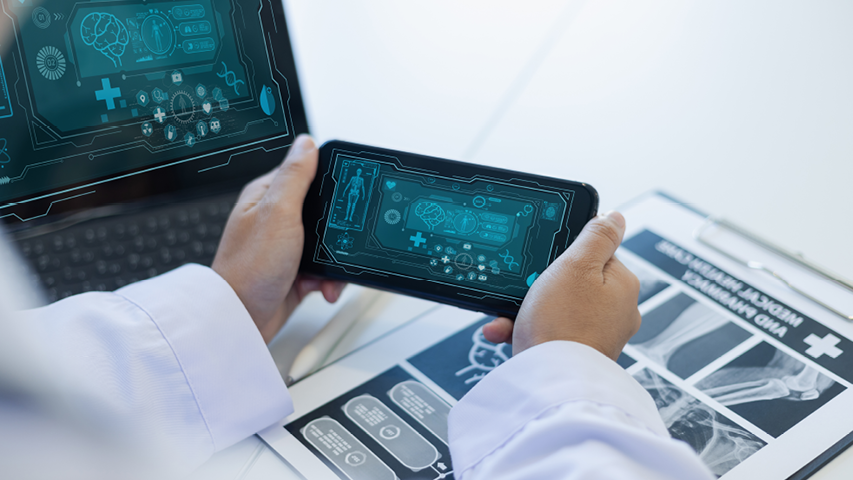
Target value-based healthcare (VBHC) for deploying clinical-grade remote patient monitoring and cellular hardware solutions.
As you know, European healthcare is undergoing a major structural transformation. Driven by an ageing population and rising care costs, healthcare systems across the continent are moving away from the traditional fee-for-service model. Instead, they are embracing value-based healthcare (VBHC), a framework that ties provider reimbursement directly to patient health outcomes rather than the volume of procedures performed. For VBHC to succeed at scale, European medical networks must find ways to manage chronic conditions proactively beyond the four walls of the clinic. This systemic shift creates an unprecedented opportunity for IT solution providers, value-added resellers (VARs), and systems integrators to deliver the infrastructure that enables distributed care.
The core technology powering this transition is clinical-grade remote patient monitoring (RPM). The European market for remote patient monitoring devices is booming. In fact, the broader global RPM market is projected to reach $71.29 billion in 2026, with Europe as the second-largest market. This rapid growth is fuelled by national initiatives and pan-European regulatory updates. The ongoing implementation of the European Health Data Space (EHDS) framework aims to standardise electronic health records and facilitate secure cross-border data sharing. By eliminating data silos and standardising electronic records, the EHDS is projected to drive a 20% to 30% expansion in the European digital health sector while generating €11 billion in healthcare savings over the next decade. For solution providers, this means the regulatory landscape is finally aligning with technological capabilities, clearing the path to deploy sophisticated chronic disease management solutions that integrate seamlessly with major hospital platforms.
To capture this vertical successfully, you must focus on delivering end-to-end solutions that address the primary pain points of clinical teams, specifically data accuracy and patient compliance. General consumer wearables lack the diagnostic accuracy required for medical interventions. Hospitals require clinical-grade remote patient monitoring solutions that reliably track metrics for conditions such as hypertension, type 2 diabetes, chronic obstructive pulmonary disease, and cardiovascular illnesses. Your role as an integrator is to build a secure bridge between these medical endpoints and the electronic health records used by clinical teams, ensuring that all data transfers comply with the stringent security requirements of the GDPR.
The hardware layer of these deployments represents a substantial revenue opportunity, particularly when targeting the elderly population. Older patients often lack reliable home broadband or find traditional consumer setups difficult to navigate. To bridge this digital divide, you should deploy cellular-connected mobile computers and tablets tailored for older adults. These devices must use integrated eSIM technology to connect out of the box to local cellular networks, eliminating the need for a patient to configure a home Wi-Fi router. The hardware specifications must also meet stringent clinical requirements, including healthcare-grade antimicrobial plastics that withstand repeated disinfection with industrial medical wipes, high-contrast displays for visually impaired users, and loud, clear audio for telehealth consultations.
An expanding European care model increasingly incorporates digital coordination for social prescribing. This practice involves clinicians addressing the social determinants of health by connecting patients with non-medical community resources, such as local exercise groups, peer support circles, and nutritional workshops. General practitioners increasingly view digital social prescribing as a vital tool to combat social isolation and loneliness among older adults, provided the technology removes operational friction. The real-world impact is clear: robust tracking shows that structured social prescribing can reduce GP appointments by 42.2% and cut emergency department attendances by up to 23%. With more than 2.6 million primary care referrals already occurring in leading regions such as England, health networks urgently need the underlying digital infrastructure to manage these workflows. Your opportunity lies in deploying software platforms and closed-loop referral networks that enable clinicians to issue these non-medical prescriptions, track patient participation, and automatically report on wellness outcomes.
Successfully deploying enterprise remote patient monitoring across a regional health network requires flawless execution at the device level. If a patient receives a tablet that requires complex setup, user registration, or manual Bluetooth pairing with medical sensors, the deployment will fail before it even begins. Elderly patients require an appliance experience, where turning on the device instantly launches a locked-down, secure healthcare interface. Managing this level of customisation across hundreds or thousands of endpoints can quickly overwhelm a traditional integrator's technical bench, which is exactly where a collaborative partnership becomes essential.
Partnering with an experienced distributor like BlueStar allows you to offload the logistical complexity of high-volume healthcare rollouts. Through their extensive suite of partner services, BlueStar provides the specialised hardware provisioning and staging needed to make these healthcare initiatives viable. Their team can manage the entire device preparation pipeline, including unboxing, updating firmware, installing specific mobile device management profiles, provisioning cellular eSIM profiles, and pre-pairing the tablets with corresponding clinical-grade sensors. When the device arrives at an elderly patient's doorstep, it is ready for immediate use. By leveraging BlueStar's configuration capabilities, your engineering team can focus on software integration and clinical workflows, secure in the knowledge that the hardware deployment will scale smoothly.
Discover how BlueStar can accelerate your healthcare practice by exploring their comprehensive European technology ecosystems at the BlueStar solutions and insights portal.

Explore how European technology solutions providers (TSPs) can transform hospital check-in with secure identification systems like barcodes, RFID,...

European healthcare is at a crossroads. With EHDS and NIS2 looming, “good enough” data is now a liability. Healthcare trusts are trapped in legacy...

The European Health Data Space will make information available to healthcare providers, researchers and government agencies so they can help improve...