BlueStar Retail & Hospitality Newsletter Q4.24
Read about BlueStar's wrap up of 2024 in Retail & Hospitality with the Q4 Newsletter.
9 min read

by Amy Masterman
Great hardware is only one part of a successful retail or hospitality solution. To deliver real value, it needs the right software behind it and that’s where ISVs play such an important role. By bringing hardware and software together, ISVs help create complete, purpose-built solutions that address customers’ operational challenges and improve their experience.
At BlueStar, we do more than supply the latest technology. As your trusted partner, we connect you with the right ISVs(channel focussed only who will not compete), make valuable introductions and help you build solutions that are ready for the demands of today and the opportunities of tomorrow.
In this edition, we highlight the ISVs, innovations and emerging trends shaping retail and hospitality across Europe. From payments and accessible self-service to fiscalisation, we’re helping you stay ahead of the curve, discover new opportunities and deliver complete solutions that make a genuine difference.


.png?width=400&height=63&name=RetailForce%20Logo%20(1).png) For decades, retail expansion was primarily a question of location, logistics, and customer demand. Today, technology has removed many of those barriers. Cloud-based POS platforms, digital payments, self-checkout solutions, and centralized retail systems allow retailers to enter new markets faster than ever before.
For decades, retail expansion was primarily a question of location, logistics, and customer demand. Today, technology has removed many of those barriers. Cloud-based POS platforms, digital payments, self-checkout solutions, and centralized retail systems allow retailers to enter new markets faster than ever before.
Yet many retailers are discovering a different reality: opening a store is no longer the difficult part.
The real challenge begins after market entry.
As retailers expand across borders, they face a growing patchwork of fiscal regulations, reporting obligations, data retention rules, and e-invoicing requirements. Governments across the world are increasing these requirements: E-invoicing mandates are spreading, fiscal reporting obligations are becoming more sophisticated, and authorities expect transaction data to be available in increasingly standardized formats.
This shift creates a strategic challenge for retailers and hospitality operators. Every new market offers growth opportunities, but every market also introduces a new layer of regulatory complexity. Managing these requirements through country-specific integrations is becoming increasingly difficult to justify, both operationally and financially.
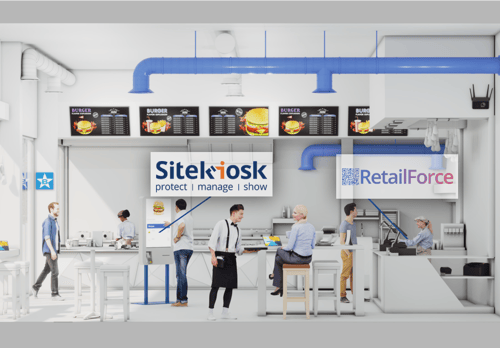
The most forward-looking organizations are therefore changing their perspective. Rather than treating compliance as a local problem that must be solved market by market, they are incorporating it into their broader technology strategy. This is precisely where providers such as RetailForce see growing demand: helping retailers and solution providers expand internationally without turning compliance into a barrier to growth.
This is particularly relevant as new retail concepts continue to gain momentum. Self-checkout, mobile POS, unattended retail, and seamless payment experiences all promise greater convenience and efficiency. However, every transaction still needs to meet local legal requirements, regardless of how innovative the customer journey may be.
Retail innovation will continue to shape the customer experience. But as businesses pursue international growth, one factor is becoming increasingly decisive: the ability to scale compliance as easily as the business itself. In modern retail, competitive advantage is no longer just about opening more stores. It is about staying compliant wherever growth takes you.
Self-service solutions are continuing to expand across retail, hospitality and many other industries. At the same time, an important shift is taking place: companies do not always need to develop an entirely new application in order to introduce self-service.
Many organisations already have powerful web applications for product information, ordering processes, customer services, employee services or internal workflows. The opportunity increasingly lies in bringing these existing applications into physical environments and making them suitable for unattended use on publicly accessible devices.
Simply opening a website in full-screen mode, however, is usually not enough.
A professional self-service environment must control which content users can access, prevent manipulation of the operating system, detect and recover from errors automatically, and return the device to a defined starting point after each session.
As deployments grow, another challenge becomes increasingly important: visibility. Operators need to know whether devices are online, functioning correctly and running the intended content or application. What may be manageable manually with two or three devices quickly becomes much more complex across hundreds of terminals and locations.
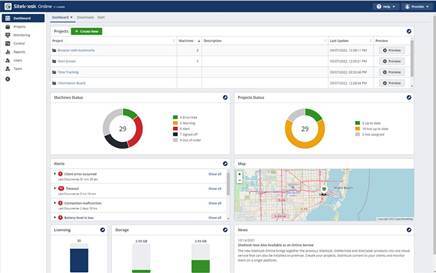
Centralised monitoring therefore becomes an essential part of professional self-service operations. A single management interface can provide an overview of device status, project status, alerts and locations, helping operators identify issues quickly and manage distributed kiosk environments more efficiently.
Centralised monitoring provides an at-a-glance overview of device status, alerts, projects and locations across a kiosk deployment.
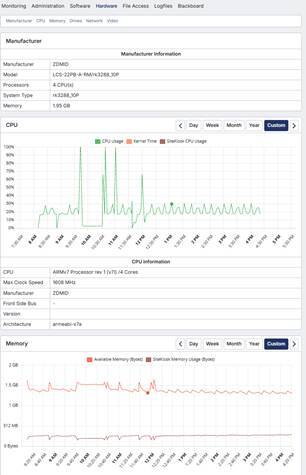
Monitoring can also go beyond basic online or offline status. Hardware information such as CPU and memory utilisation provides additional insight into device health and can help identify potential performance issues before they affect the user experience.
Hardware monitoring provides insight into CPU and memory utilisation over time, supporting proactive device management.
This is where kiosk software increasingly acts as an operational layer between the existing application, the device and the user. Rather than replacing an existing web application, platforms such as SiteKiosk can add functionality including operating system and browser lockdown, automatic startup, session reset, central configuration, monitoring and remote administration.
Hardware is another important part of this development. Modern self-service projects increasingly combine software with scanners, RFID readers, printers, sensors, payment solutions and other peripherals. For resellers and system integrators, this creates opportunities that go far beyond simply supplying a touchscreen. The value lies in combining suitable hardware with a customer’s existing digital services and turning them into a complete, centrally managed solution.
Moving Beyond Standalone Kiosk Systems
The role of the kiosk itself is also changing. Instead of treating each terminal as an isolated piece of hardware running a single standalone application, companies are increasingly viewing their devices as part of a connected infrastructure.
For resellers, this opens the door to conversations beyond traditional hardware replacement cycles. Existing web applications, portals and digital processes can become the starting point for new self-service projects across retail, hospitality and beyond.
Retail, hospitality, logistics and other frontline industries are becoming increasingly reliant on connected technology to keep their operations moving. From handhelds and tablets to kiosks and shared devices, endpoints have become an essential part of how frontline employees access information, serve customers and complete everyday tasks.
But as these environments become more connected and the number and variety of endpoints increases, managing the device itself is only part of the challenge.
What’s changing?
Frontline environments are rarely straightforward. Devices may be shared between employees across different shifts, used for multiple applications or deployed across locations with different operational requirements. At the same time, organisations need to protect corporate data and ensure employees can access the applications and information they need without introducing unnecessary friction.
This makes traditional, device-centric approaches increasingly difficult to scale.
The question is no longer simply “Is this device secure and compliant?” It is also “Who is using it, what should they have access to, and can we manage that experience consistently?”
This is driving a move towards more unified endpoint management, bringing greater visibility and control across different device types while helping organisations automate configuration, application deployment, security policies and remote support.
Identity is becoming part of the equation
For shared and frontline devices in particular, identity and access are becoming increasingly important. Applying Zero Trust principles means considering more than the endpoint itself – organisations need to understand the user, the device and the context in which access is being requested.
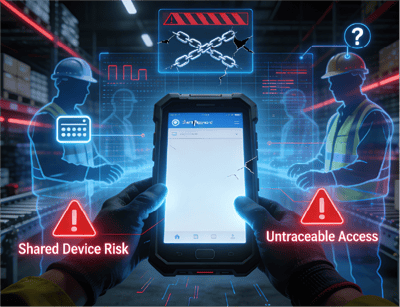
This is where Frontline Identity, Access and Management (FIAM) is emerging as an important evolution. By bringing identity, access and endpoint management closer together, organisations can create a more secure and consistent frontline experience without compromising the usability employees need to get their jobs done.
For resellers, this represents an opportunity to move the conversation beyond individual devices and towards the wider operational challenge. Customers increasingly need help connecting endpoint management, security and user access into a strategy that works across their entire frontline environment.
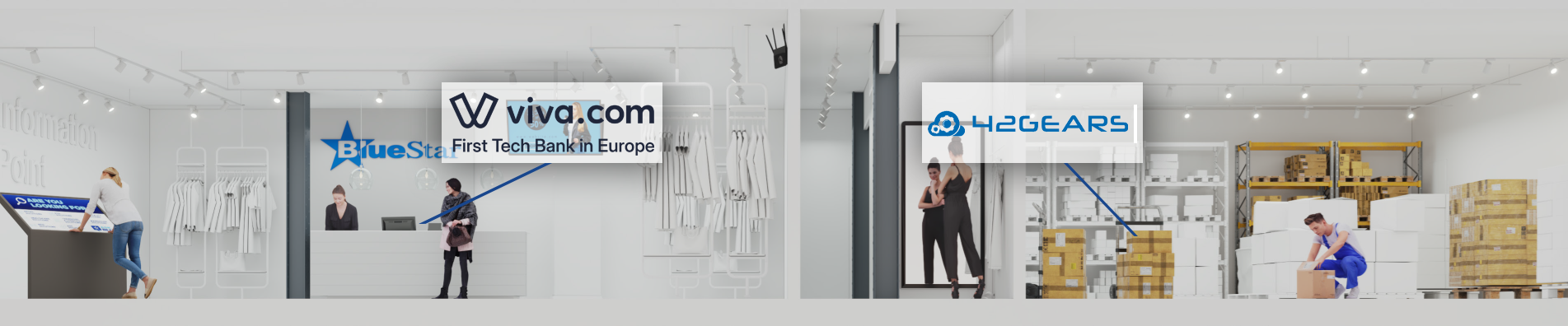
Solutions such as 42Gears SureMDM enable organisations to take this unified approach, providing centralised visibility and management across diverse endpoint environments, with capabilities including application management, device lockdown and remote troubleshooting.
The future of frontline technology isn't simply about deploying more endpoints. It's about making the technology behind frontline operations smarter, more secure and easier to manage – while giving employees the access they need to do their jobs effectively.
 Small and Medium Businesses (SMBs) are underserved when it comes to financing. Traditional banks no longer know their merchants: credit decisions still rely on historic financials and account statements, not on the cash flow the business actually generates day to day. The credit assessment process is paper-heavy and slow, with offers measured in weeks or months rather than days — a pace that doesn't match how SMBs operate. And the cost of running that process doesn't scale down to a small merchant's ticket size. As a result, financing for SMBs remains limited and expensive.
That's changing. Payments, banking, financing, and the software running the business can now sit on the same platform — this is embedded finance. Financing can be applied for digitally, from the same dashboard the merchant already uses, and assessed in real time on the payment transaction data already flowing through the platform, not a stack of paperwork or a generic credit check. Because the assessment runs on real cash flow, not solely on historic statements, the platform understands the merchant's actual financial position and can provide financing tailored to its needs. For a seasonal business, that means repayment can flex with sales rather than a fixed monthly bill. Businesses now expect it everywhere: they want the software they already chose to also handle payments and help fund the next terminal, the new POS rollout, or the gap between a slow season and a busy one, without juggling three separate vendor relationships to get there.
But not every version of this works the same way, and that's worth paying attention to. Some platforms route financing through a chain of intermediaries: a payments processor, layered with a lending API, layered with a bank the merchant never didn't choose. It works fine until it doesn't. When one link in that chain runs into trouble, it's the merchant's financing, and the reseller's credibility, caught in the middle.
That's the more useful question to raise before any deal closes: not “does this platform offer financing,” but “who's actually standing behind it, and how many hands is it passing through to get there”. Financing that comes from a licensed bank and sits inside the platform directly, rather than bolted on through a stack of third parties, is a fundamentally different, more durable proposition than financing that's simply available somewhere in the stack.

This is Viva.com’s model: a single platform combining omnichannel payments, banking services, and tailored financing, including working capital, as the first Tech Bank in Europe for businesses, operating across 31 European countries. As a licensed bank, not just a payments company, Viva.com brings bank-grade security and genuine banking products, with the speed and digital experience of a tech platform. It means that the same partner, already processing payments, can provide merchants with financing tailored to their needs – assessed digitally, on real time data, at convenient and transparent terms, and in days not weeks. For resellers, that's one relationship for you to explain instead of three to untangle for your customers.





Read about BlueStar's wrap up of 2024 in Retail & Hospitality with the Q4 Newsletter.
Read about how Business is being transformed by self-service technology in BlueStar's Retail & Hospitality 2025 Q2 Newsletter!

Read BlueStar's Retail & Hospitality 2026 Q1 Newsletter for the latest insights in payment solution technologies, solutions from Sunmi, and market...