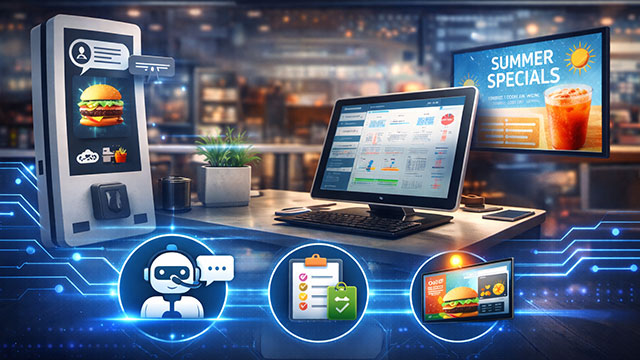
AI is getting attention across hospitality for the same reason online ordering and kiosks once did. The difference is that AI is broader, more flexible, and often less clearly defined, which leaves many businesses asking the same question: where do we start?
Online ordering and self-service kiosks were already familiar tools before the pandemic pushed them into the mainstream. AI is different. It has the potential to support a much wider range of repetitive, manual tasks across the business.
That opportunity is exciting, but it also creates uncertainty. Many hospitality businesses know they want to improve efficiency, reduce pressure on staff, and make smarter decisions, but they are not always sure which use cases will make the biggest difference first.
While the biggest AI success stories often come from organisations with dedicated internal teams, many operators are looking for practical, ready-built solutions that solve specific problems without needing to build everything from scratch.
Turning AI Into Something Actionable
This is where practical guidance becomes important. As a value-added distributor, we help identify real hospitality use cases and connect them with the right mix of software and hardware to support them.
We work with ISV partners developing tools around real pain points in hospitality. That means the conversation does not need to begin with broad claims about AI. It can begin with a clear operational challenge and a solution designed to address it.
Order Taking
Conversational AI can now go beyond basic scripted interactions. It can understand natural language, recognise different ways of asking for the same item, and handle follow-up questions or order changes without forcing the customer to start over.
That creates a faster and more natural ordering experience. It can also improve accessibility for kiosk users who are less comfortable using touchscreens and support multilingual interactions that help more customers order with confidence.
It also makes upselling more consistent. Instead of relying on staff to remember every suggestion during busy periods, AI can present relevant add-ons automatically, freeing staff to focus on fulfilment when demand is highest.
Inventory Management
AI-driven inventory tools can forecast demand more accurately by using live transaction data as the foundation, then layering in factors that standard software may not fully account for. That can include active promotions, pricing changes, stock shortages, weather, and holidays.
Rather than creating a single static forecast, these tools update continuously as new data comes in. That means the system is not simply measuring what has sold. It is also learning why products sell and what is likely to happen next.
In practical terms, that helps businesses improve replenishment decisions, reduce waste, avoid stockouts, and identify slow-moving or overstocked items more intelligently.